
Repair Cost Estimator for Flips: Get Accurate Budgets
A repair cost estimator for flips turns guesswork into a real budget. See how ChatARV calculates rehab costs and ARV in 60 seconds—try it free.
A repair cost estimator for flips is the tool that turns a walkthrough full of guesswork into a defensible renovation budget, and getting it right is often the difference between a profitable flip and a deal that quietly eats your margin. For wholesalers and fix-and-flip investors, every minute spent manually pricing drywall, roofing, and HVAC work is a minute a competitor can use to beat you to the contract. This article breaks down how a repair cost estimator for flips works, what it should calculate, and how a tool like ChatARV generates a full repair budget alongside ARV and offer numbers in about 60 seconds.
Quick answer: A repair cost estimator for flips calculates renovation costs — labor, materials, permits, and contingency — for a specific property so investors can determine their Maximum Allowable Offer (MAO) and expected profit before making an offer. The strongest tools pull from real market data and recalculate instantly when the scope of work changes after a walkthrough.
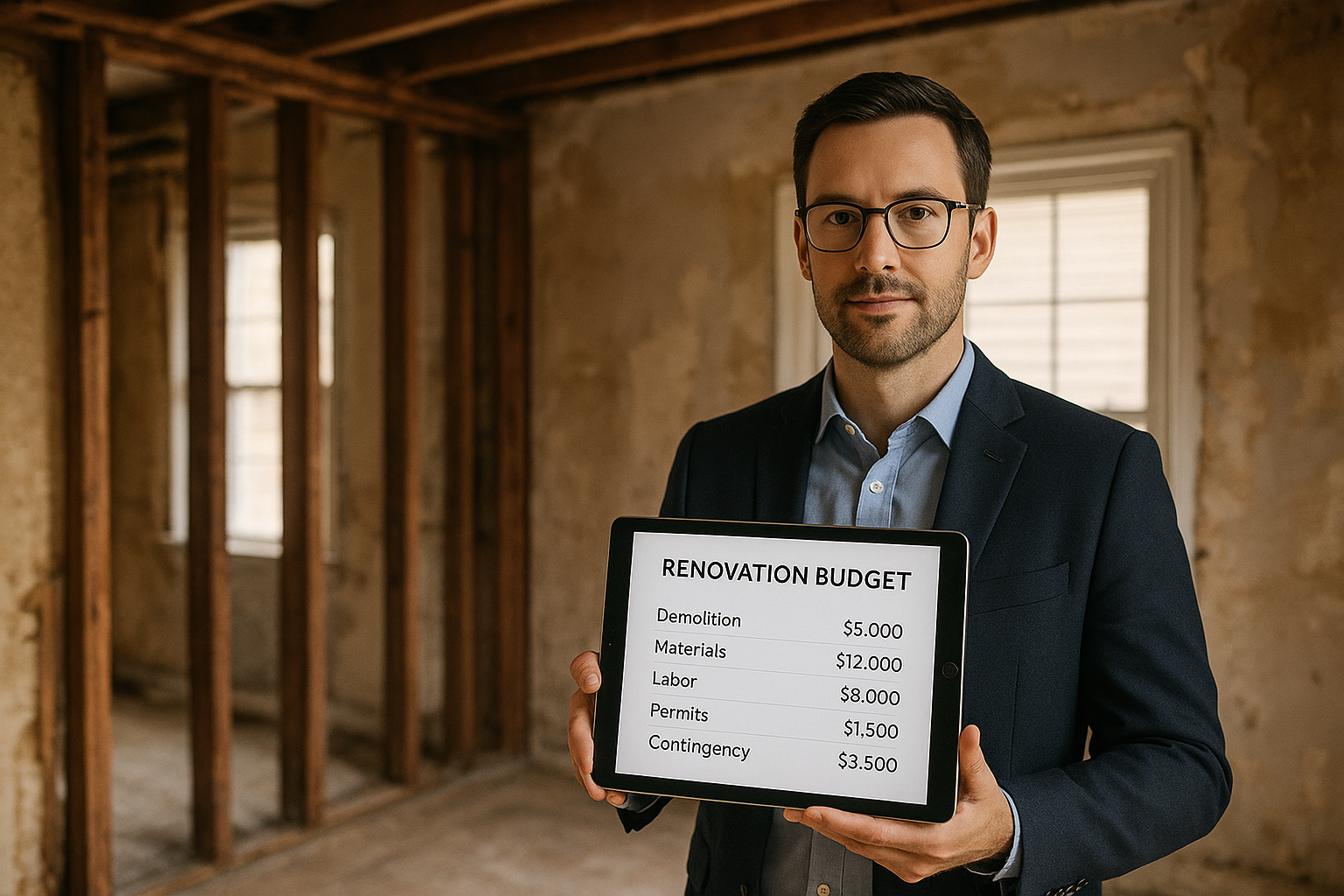
Using a repair cost estimator for flips on-site helps investors adjust the budget the moment a walkthrough reveals new issues.
What Is a Repair Cost Estimator for Flips?
A repair cost estimator for flips is software or a calculator that breaks a property's renovation needs into priced categories — structural, mechanical, cosmetic, and permitting — then totals them into a single rehab budget. Consequently, investors can subtract that number from the After Repair Value (ARV) to find their offer ceiling before they ever speak with a contractor.
In practice, the best estimators do more than guess a flat per-square-foot number. They factor in the property's age, condition, bedroom and bathroom count, and regional labor costs, similar to how an ARV calculator for real estate investors weighs comparable sales. Together, these two numbers — repair costs and ARV — form the backbone of nearly every wholesale, flip, or BRRRR offer.
Why a Rehab Cost Calculator Matters for Every Flip
A rehab cost calculator matters because repair estimates directly determine whether a deal is profitable. If the estimate is too low, an investor can lock in a contract that loses money once the real work begins. If it's too high, they risk losing the deal to a competitor who ran faster, more confident numbers.
Speed matters just as much as accuracy. According to ATTOM Data Solutions, which tracks nationwide flipping activity, gross profit margins on flips have tightened in recent years as renovation and holding costs rise — meaning there is less room for a miscalculated budget. As a result, investors who estimate repairs manually, property by property, are increasingly at a disadvantage against those using automated tools.
This is also why holding costs deserve attention alongside repair costs. In particular, a longer rehab timeline from an underestimated scope compounds interest, insurance, and utility expenses — a connection explored further in this guide on calculating holding costs on a flip.
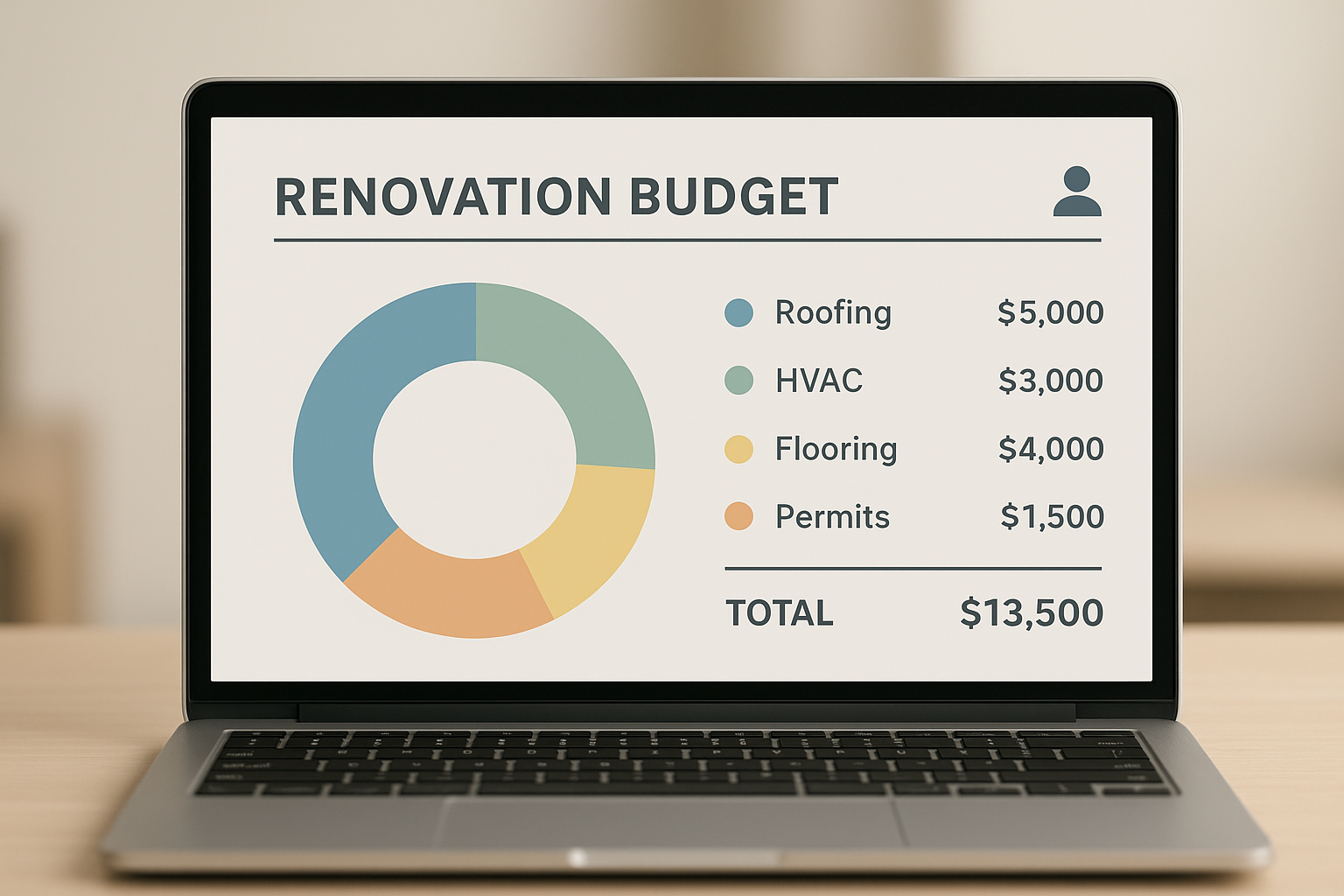
A detailed line-item breakdown is what separates a reliable rehab cost calculator from a rough guess.
How ChatARV's Renovation Cost Calculator Works
ChatARV's renovation cost calculator is built around a simple idea: investors need a defensible number before the seller hangs up, not after. Here is how the process typically runs, step by step.
- Enter the property address. Type the full address into the repair cost estimator so it can pull recent comparable sales, property characteristics, and local renovation pricing automatically.
- Review the AI-suggested repair scope. Check the automatically generated line items covering structural, mechanical, cosmetic, and permit costs against any listing photos or notes.
- Adjust line items after your walkthrough. Update individual categories once you've walked the property in person, since issues like foundation cracks often change the original estimate significantly.
- Review the recalculated ARV, MAO, and offer. Let the tool instantly recalculate ARV, Maximum Allowable Offer, and profit projections across every exit strategy so you can present a confident number on the same call.
For example, one ChatARV user discovered a property needed a full gut rehab during a walkthrough. Once he updated the repair scope, the report recalculated to roughly $88,000 instantly — and he used that number to renegotiate and land a $35,000 assignment fee. That kind of fast recalculation is simply not possible with a spreadsheet and a calculator app.
Repair Cost Categories a Flip Budget Must Cover
Regardless of which repair cost estimator for flips you use, the underlying budget should always break down into the same core categories. Missing any one of these is a common source of budget overruns.
- Structural and foundation — framing, foundation cracks, load-bearing repairs.
- Roofing and exterior — roof age, siding, windows, and drainage.
- Mechanical systems — HVAC, electrical panels, and plumbing lines.
- Interior finishes — flooring, kitchens, bathrooms, and paint.
- Permits and soft costs — inspections, permit fees, and design.
- Contingency reserve — typically 10 to 15 percent of the total budget.
Notably, investors who use FHA's 203(k) rehabilitation loan program guidelines for reference will recognize this same category structure, since government-backed renovation lending uses a comparable breakdown to approve draw schedules.
Common Mistakes When Estimating Flip Repair Costs
Even experienced investors fall into a few predictable traps when budgeting a flip. Avoiding them is often simpler than fixing a bad estimate mid-renovation.
First, many investors estimate purely from cosmetic observations, missing hidden mechanical or structural problems that only surface once walls open up. Second, they skip contingency entirely, leaving no cushion for surprises. Third, they apply a flat per-square-foot number across every property, regardless of condition, which rarely matches reality. Finally, some investors fail to revisit the estimate after the walkthrough, locking in numbers based only on listing photos rather than what the property actually needs.
Repair Cost Estimator vs. Manual Contractor Bids: What's the Difference?
Manual contractor bids are valuable for confirming a scope before closing, but they're slow — often taking days to schedule and return. In contrast, a repair cost estimator for flips gives an immediate, consistent number that doesn't depend on which contractor happened to answer the phone that week.
Most experienced investors use both in sequence: the estimator to make a fast, confident offer, and a contractor bid afterward to validate the scope before funds change hands. This mirrors the broader decision investors face when choosing an exit strategy, a topic covered in more depth in this guide on choosing between wholesaling and flipping houses.
Turning Repair Estimates Into a Confident Offer
Once repair costs and ARV are both in hand, calculating an offer is straightforward: ARV minus repair costs minus desired profit equals the Maximum Allowable Offer. However, the number only matters if you can explain it. ChatARV reports show every comp used and every adjustment applied, so investors can defend the figure to sellers, cash buyers, and partners rather than simply stating a number and hoping it holds up.
This matters even for investors without large capital reserves. In fact, a confident, well-supported offer is often what allows wholesalers to secure contracts with little to no money down, a strategy explained further in this breakdown of wholesaling real estate with no money. Ultimately, the goal of any repair cost estimator for flips is the same: give you a number you trust enough to say out loud on the first call.

A shareable report built from the repair cost estimator for flips helps investors justify their offer on the spot.
Frequently Asked Questions About Repair Cost Estimator for Flips
What is a repair cost estimator for flips?
A repair cost estimator for flips is a tool that calculates renovation expenses for a specific property so investors can set an accurate offer. It typically breaks costs into structural, mechanical, cosmetic, and soft-cost categories based on the property's condition.
How does ChatARV calculate rehab costs?
ChatARV analyzes the property's size, age, and condition, then applies cost data across repair categories to build a line-item estimate. Investors can edit any line item after a walkthrough, and the ARV, MAO, and offer recalculate instantly.
How accurate are AI-generated repair estimates?
AI repair estimates are most accurate when treated as a starting budget rather than a final contractor bid. They are consistent and fast, but a physical walkthrough or contractor quote should confirm major scope items before closing.
What's the difference between ARV and as-is value?
As-is value reflects what the property is worth in its current condition, while ARV estimates its worth once renovations are complete. Repair cost estimates bridge the two by showing what it takes to get from one to the other.
How long does it take to get a repair cost estimate?
With ChatARV, a full repair cost estimate alongside comps and ARV typically takes about 60 seconds. Manual estimating, by comparison, often takes 20 to 30 minutes or longer per property.
Can I adjust the repair cost estimate after a walkthrough?
Yes. ChatARV lets you edit repair scope line items after seeing the property in person, and every downstream number recalculates immediately. This is especially useful when a walkthrough reveals issues like a full gut rehab.
What is Maximum Allowable Offer and how does it relate to repair costs?
Maximum Allowable Offer (MAO) is the highest price an investor can pay for a property and still hit their profit target. Repair costs are subtracted directly from ARV to calculate MAO, so an inaccurate repair estimate skews the offer.
Do repair cost estimators work in non-disclosure states?
ChatARV supports comping and valuation in all 12 non-disclosure states by pulling MLS-sourced transaction data across multiple providers. This removes the need for personal MLS access to run accurate repair and ARV reports.
How much should contingency be in a flip repair budget?
Most experienced flippers build in a contingency reserve of 10 to 15 percent of the total repair budget. This cushions against hidden issues like plumbing, electrical, or foundation problems found after demolition begins.
What's the biggest mistake investors make when estimating repair costs?
The most common mistake is underestimating mechanical and structural repairs because they aren't visible during a quick walkthrough. Relying only on cosmetic observations often leads to budget overruns once contractors open up walls.
Is a repair cost estimator for flips better than hiring a contractor for bids?
A repair cost estimator for flips is faster and more consistent for the initial offer stage, since contractor bids can take days and vary by who you ask. Most investors use the estimator to make the offer, then bring in a contractor to confirm the scope before closing.
Can repair cost estimates be shared with sellers and buyers?
Yes. ChatARV turns each analysis into a clean report that can be shared directly with sellers, sent to cash buyers, or dropped into existing underwriting sheets. This helps investors defend their offer with real numbers instead of guesswork.
Final Takeaway
A reliable repair cost estimator for flips is no longer a nice-to-have — it's what separates investors who confidently offer on the same call from those still digging through spreadsheets a day later. By breaking renovation costs into clear categories, recalculating instantly after a walkthrough, and tying everything back to ARV and Maximum Allowable Offer, tools like ChatARV let wholesalers and investors move at the speed the market actually demands. As flipping margins continue to tighten, as noted by industry data from ATTOM, a fast and consistent repair cost estimator for flips isn't just convenient — it's a genuine competitive advantage on every single deal.
Further reading: Wikipedia — Flipping (real estate).