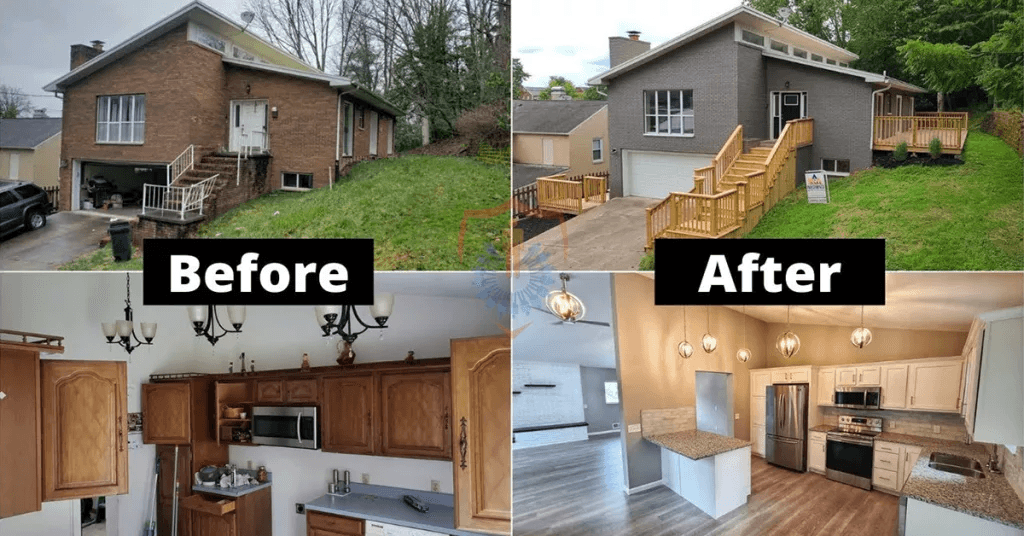
Holding costs are the expenses that accrue every day you own a property during a flip, from the day you close on the purchase to the day you collect from the sale. They're not dramatic. They just never stop.
Most investors underestimate them because the timeline runs longer than planned. A deal modeled at five months that takes seven months has two extra months of hard money interest, insurance, utilities, and taxes eating into profit. That gap is where flip deals quietly lose $10,000-20,000.
Holding costs run $1,500-3,000 per month on a typical flip and account for an estimated 40% of profit loss when not properly accounted for. Here's how to calculate them before you make an offer.
Why holding costs hit harder in 2026
In hot markets, properties move fast and investors get away with loose timelines. A deal that runs two months over still closes profitably because appreciation covers the slippage.
That's not 2026. The market has rebalanced, buyers are more rate and payment sensitive, bidding wars are less common, and homes are sitting for weeks or months rather than days. Every extra month on a flip is another month of hard money interest, insurance, utilities, and taxes. The margin doesn't absorb it the way it used to.
A deal that works at a five-month hold might not work at seven months. That's not a bad deal; it's a deal that wasn't stress-tested against a realistic timeline before the offer was made.
Every cost in the holding period
1. Hard money interest, the biggest one
Most flippers use hard money loans to fund acquisition and renovation. These are interest-only loans, meaning your monthly payment is purely interest on the outstanding balance.
Hard money rates in 2026 generally run between 9.5% and 12.5% depending on LTV, property condition, borrower experience, and market.
The calculation: (Loan amount × Annual interest rate) ÷ 12 = Monthly interest cost
Example: $200,000 loan at 11% annual rate = $200,000 × 0.11 ÷ 12 = $1,833 per month
One important detail most beginners miss: hard money loans on flips typically include a rehab holdback, the renovation funds are released in draws as work is completed, not all at once. This means your interest-bearing balance grows as draws are taken. The most common and fair method is "as disbursed"; you only pay interest on funds actually paid out to you. Some lenders charge on the full approved amount from day one, which is significantly more expensive. Confirm which method your lender uses before you sign.
2. Origination points, paid upfront but part of the cost
Points are a one-time fee charged at closing, expressed as a percentage of the loan amount. The industry standard in 2026 is 1.5 to 3 points. On a $400,000 loan, expect $6,000-12,000 in origination fees.
One point on a $200,000 loan = $2,000. Two points = $4,000. Paid at closing, non-refundable.
Origination points aren't a holding cost in the traditional sense, but they're a real cost of the deal that cash buyers don't have. Include them in your total project cost when calculating true profit.
3. Property taxes
You owe property taxes the entire time you own the property. These are typically prorated at closing when you buy and when you sell, but the daily accrual is real.
Property taxes accrue the entire time you own the property and are prorated at closing when you buy and sell. Check the actual tax bill for the property and divide by 12 to get your monthly number.
4. Insurance
You need landlord or vacant property insurance from the day you close, not homeowner's insurance, which typically excludes renovation properties and vacant dwellings. Vacant property insurance runs $100-200 per month for most single-family properties. Some hard money lenders require specific coverage as a loan condition.
5. Utilities
You need to keep utilities active during renovation. Contractors need electricity and water. The property needs heat in winter to prevent pipe damage. Budget $50-150 per month depending on season, climate, and property size. In winter markets this can run higher.
6. Lawn maintenance and exterior upkeep
A property that looks neglected on the outside while under renovation signals problems to neighbors and potential buyers before you've listed. Budget $50-150 per month for basic lawn service. More if the property has significant landscaping.
7. HOA fees
If the property is in an HOA, common in townhome communities, planned developments, and some single-family subdivisions, dues continue to accrue during your hold. You can find HOA and tax data on Zillow or directly in ChatARV before closing. Missing HOA payments during a flip can create liens that complicate your sale.
8. Permit fees
Not a monthly cost but a real cost that belongs in your holding calculation. Permits for renovation work typically run $500-3,000 depending on scope and municipality. Some jurisdictions have per-inspection fees on top of that. Factor this into your total cost before you close.
Putting it together: the monthly holding cost number
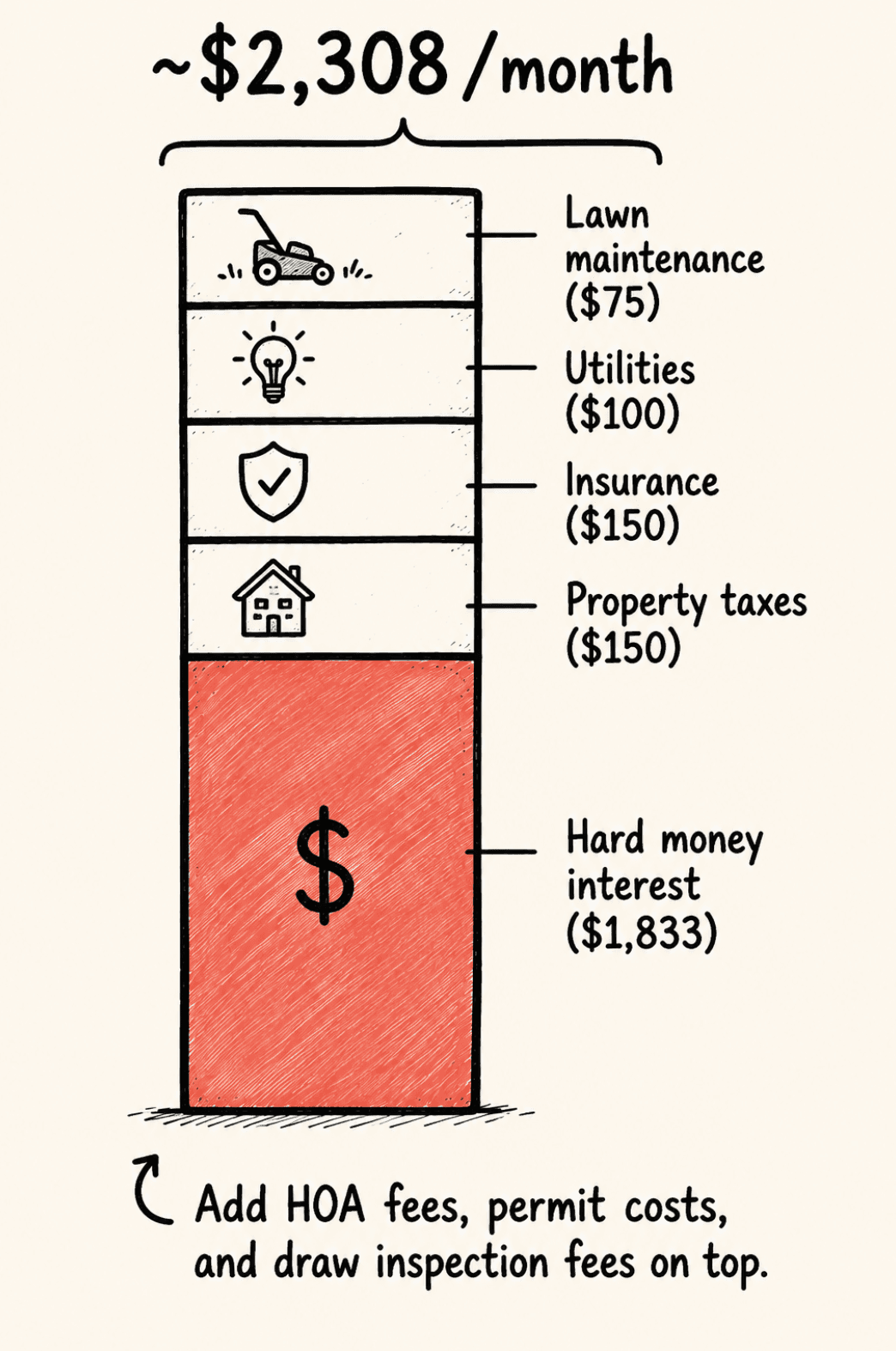
For a typical single-family flip with hard money financing, your monthly holding cost breakdown looks like this:
| Cost | Monthly Amount |
|---|---|
| Hard money interest ($200K loan at 11%) | $1,833 |
| Property taxes | $150 |
| Insurance | $150 |
| Utilities | $100 |
| Lawn maintenance | $75 |
| HOA fees | Varies — check before closing |
| Total per month | $2,308+ (more if HOA applies) |
On a $250,000 project, holding costs typically run $2,500-4,500 per month all in. Use $2,500/month as your conservative baseline on a deal in this range and stress-test against the higher end.
The timeline math that most people skip
Knowing your monthly holding cost isn't enough. You need a realistic hold timeline — and then you need to stress-test it.
A realistic flip timeline:
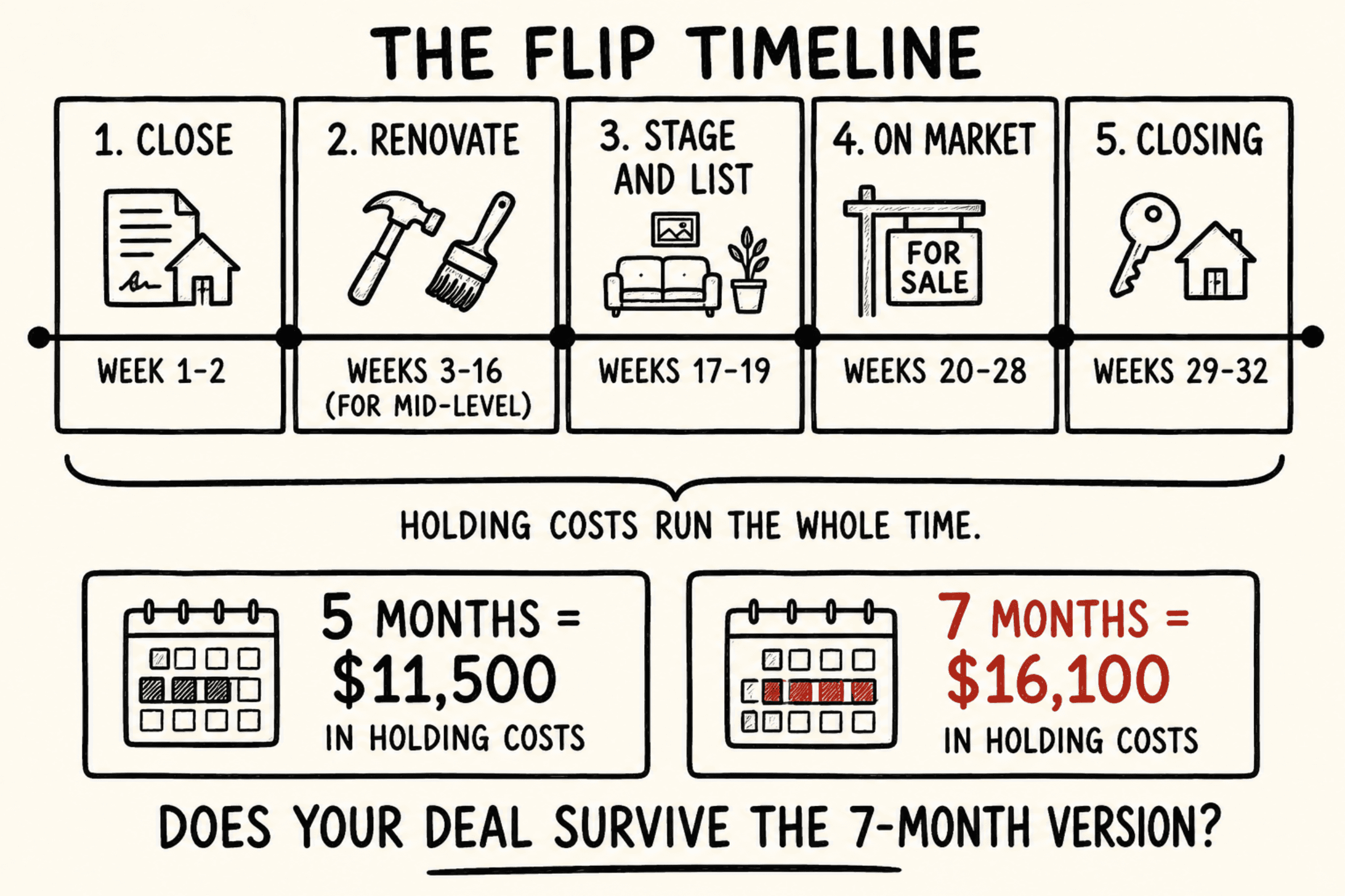
Acquisition and closing: 1-2 weeks. Light cosmetic renovation: 4-8 weeks. Mid-level renovation: 8-14 weeks. Full gut: 14-24 weeks. Staging and listing prep: 2-3 weeks. Time on market to accepted offer: 2-8 weeks depending on the market. Closing: 2-4 weeks.
Total for a mid-level flip: roughly 5-7 months from purchase to sale proceeds.
Stress-test the number. If your deal works at five months but falls apart at seven, you're betting that nothing goes wrong. Contractor delays, permit backlogs, a slow buyer, a deal that falls out of escrow and has to be relisted — any of these push the timeline. The correct approach: model holding costs at your expected timeline, then verify the deal still works at two months longer. If it doesn't survive that test, the margin isn't there.
How to build holding costs into your offer
Holding costs belong in your max buy price calculation, not as an afterthought after you've already committed to a purchase price.
The formula ChatARV uses:
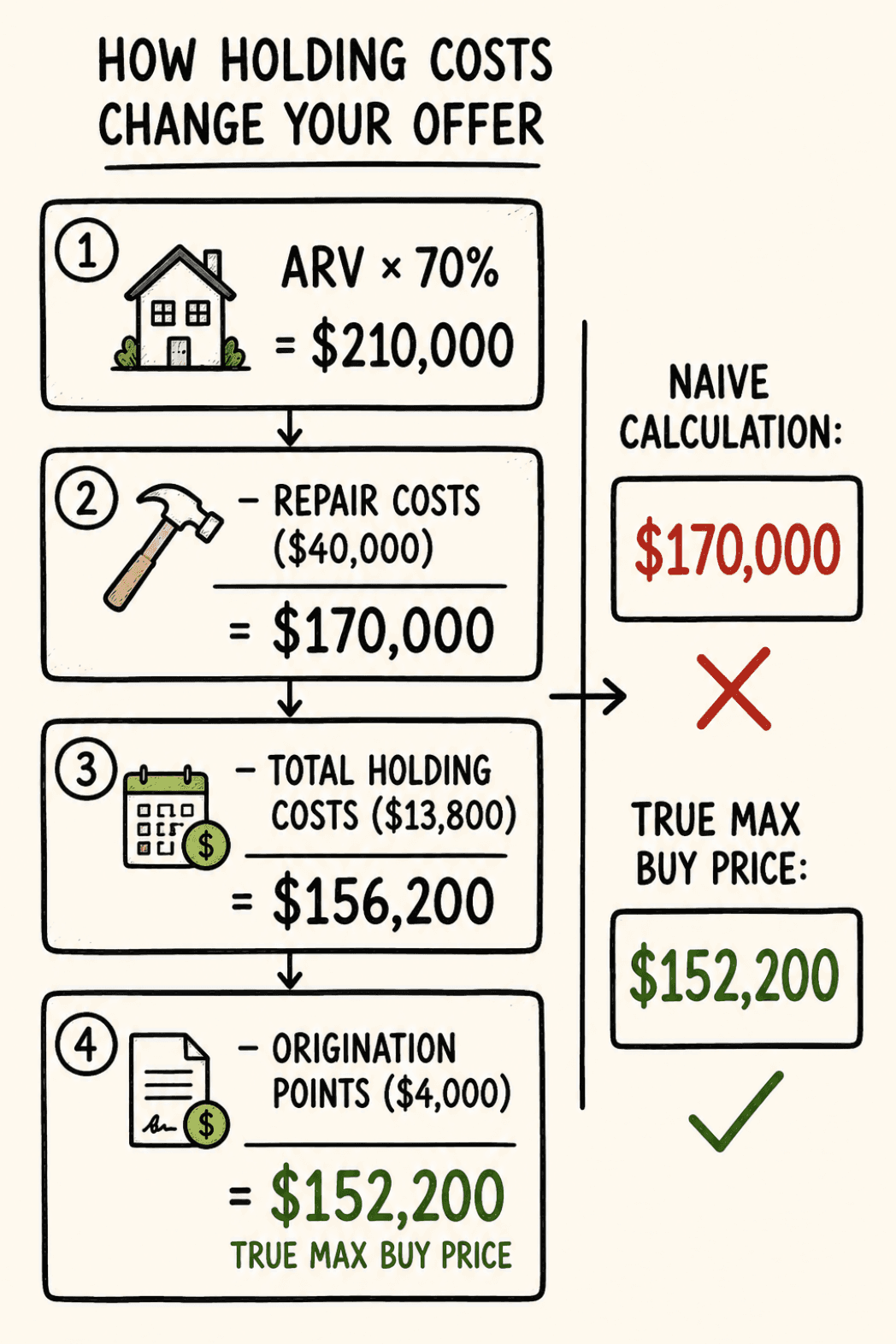
ARV − Repair Costs − Holding Costs − Closing Costs − Selling Costs − Desired Profit = Maximum Buy Price
Example: ARV $300,000, repairs $40,000, holding costs at 6 months ($2,300/month = $13,800), origination points ($4,000), closing and selling costs ($12,000), desired profit ($30,000).
$300,000 − $40,000 − $13,800 − $4,000 − $12,000 − $30,000 = $200,200 maximum buy price
The 70% rule is a quick shortcut some investors use, but it bakes in assumptions about costs and profit that may not match your deal. Subtracting actual costs gives you a number specific to this property, this market, and this timeline.
ChatARV's free flip calculator runs this math automatically, ARV from real comps, repair estimates, and a full cost breakdown, including holding costs and financing, before you make an offer. Run your numbers here.
The cash buyer version
If you're buying cash, the calculus changes but doesn't disappear. You don't have a monthly interest, but you have an opportunity cost. Every month the property is tied up is a month that capital isn't working somewhere else. Most experienced cash buyers apply a 6-8% annual opportunity cost to their cash in the deal, which is roughly the return they could get elsewhere. On $200,000 cash, that's $1,000-1,333 per month in opportunity cost before taxes, insurance, and utilities.
Cash deals are better. But "no financing cost" doesn't mean "no holding cost."