Pre-foreclosure is one of the most misunderstood opportunities in real estate investing. Most people either avoid it entirely, thinking it's too complicated or feels predatory, or they approach it the wrong way and wonder why sellers won't talk to them.
Done right, it's one of the most consistent sources of motivated sellers in any market. The seller genuinely needs help. You can provide it. That's not predatory, that's what the strategy is supposed to be.
Here's how it actually works.
What pre-foreclosure means
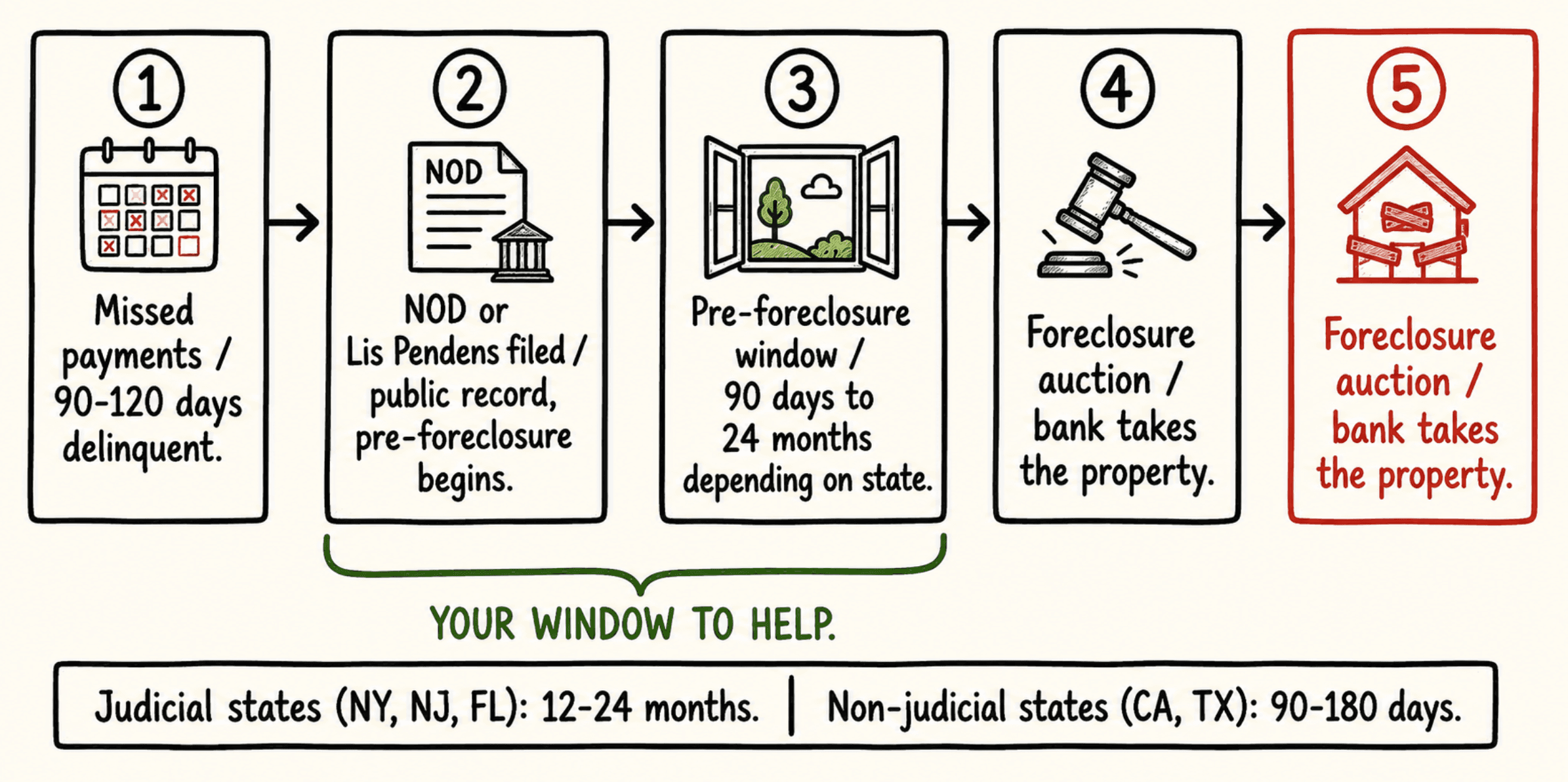
Pre-foreclosure is the period between when a homeowner falls behind on mortgage payments and when the bank actually takes the property. The lender has filed a public notice, either a Notice of Default (NOD) in non-judicial states or a Lis Pendens in judicial states, but the homeowner still owns the property and can still sell it.
Pre-foreclosure typically lasts anywhere from 90 days to a year or more, depending on the state. Judicial foreclosure states like New York, New Jersey, and Florida move slowly, sometimes 12-24 months. Non-judicial states like California and Texas move faster, often 90-180 days. The timeline determines how much pressure the seller is under and how quickly you need to move.
During this window, the homeowner has options: catch up on payments, negotiate a loan modification, do a short sale, or sell to an investor for cash. Your job is to be the clearest, most credible option on the table when they're ready to decide.
Why the opportunity exists in 2026
Foreclosure filings increased 14% in 2025, reaching over 367,000 properties, the first significant uptick since 2019. That's not a 2008-style crisis; homeowner equity is strong and lending standards are tighter. But it is market normalization, and it means a larger pool of pre-foreclosure sellers than investors have seen in several years.
The states with the most activity right now: Florida, Delaware, South Carolina, Illinois, Nevada, New Jersey, and Ohio have the highest foreclosure rates per housing unit heading into 2026.
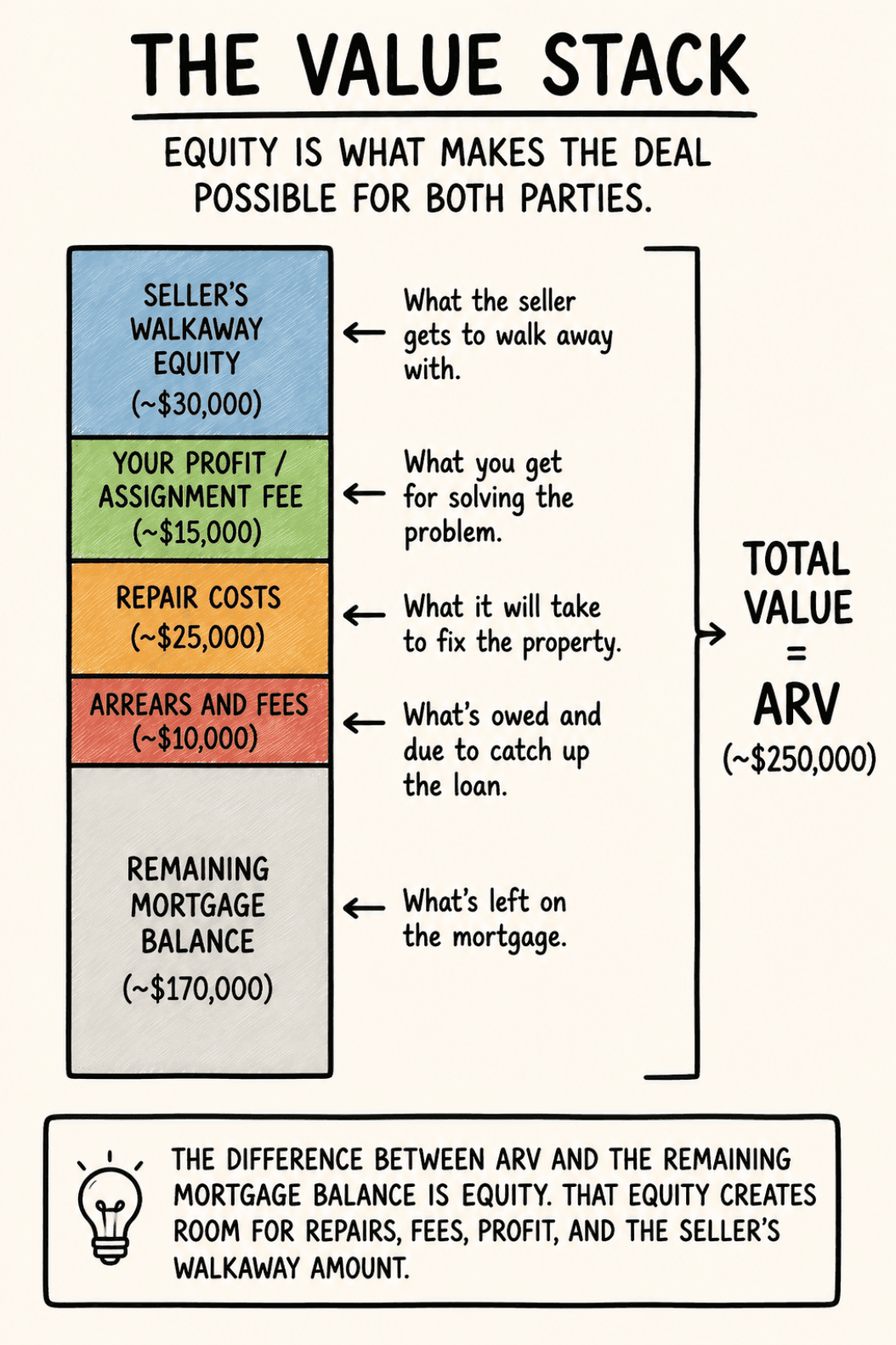
The key difference from a crisis environment: these homeowners often have equity. They're not underwater; they're behind on payments for other reasons. Job loss, divorce, medical bills, or a life event that disrupted their income. That equity is what makes a sale possible. A homeowner with no equity can't sell to you at a discount. A homeowner with $80,000 in equity and three missed payments absolutely can, and walking away with some of that equity beats losing everything at auction.
How to find pre-foreclosure properties
County courthouse records. Every Notice of Default and Lis Pendens is filed as a public record with the county recorder or clerk. These are free to access. Most counties have online search portals; search your county name plus "lis pendens" or "notice of default," and you'll find the filing portal. This is the raw source data. It takes more time than a paid service but costs nothing.
ATTOM, PropStream, BatchLeads. These platforms aggregate public foreclosure data across all counties and let you filter by filing date, property type, equity position, and geography. They cost money but save significant time. For investors targeting volume, the subscription pays for itself quickly.
Foreclosure.com, RealtyTrac. Consumer-facing aggregators that publish pre-foreclosure listings. Widely used, which means the sellers on these lists are also being contacted by other investors and real estate agents. More competition than the county record approach.
Your county assessor's website. Cross-reference NOD/lis pendens filings with property tax records to estimate equity. A property bought for $150,000 in 2017, currently assessed at $280,000, with a remaining mortgage you can estimate from public records, that's a seller with real equity and a real reason to sell before the auction.
The investors who consistently win on pre-foreclosure leads pull data early, immediately after filing, and reach out before everyone else does. The best opportunities go to investors who use real-time data to identify properties early in the pre-foreclosure stage. A seller who's been in pre-foreclosure for four months has already been called by a dozen investors. A seller who filed last week hasn't heard from anyone yet.
How to approach sellers, the part most investors get wrong

Pre-foreclosure sellers are people in financial distress who are potentially about to lose their home. Coming in aggressive or low-balling immediately is the fastest way to get a door slammed in your face.
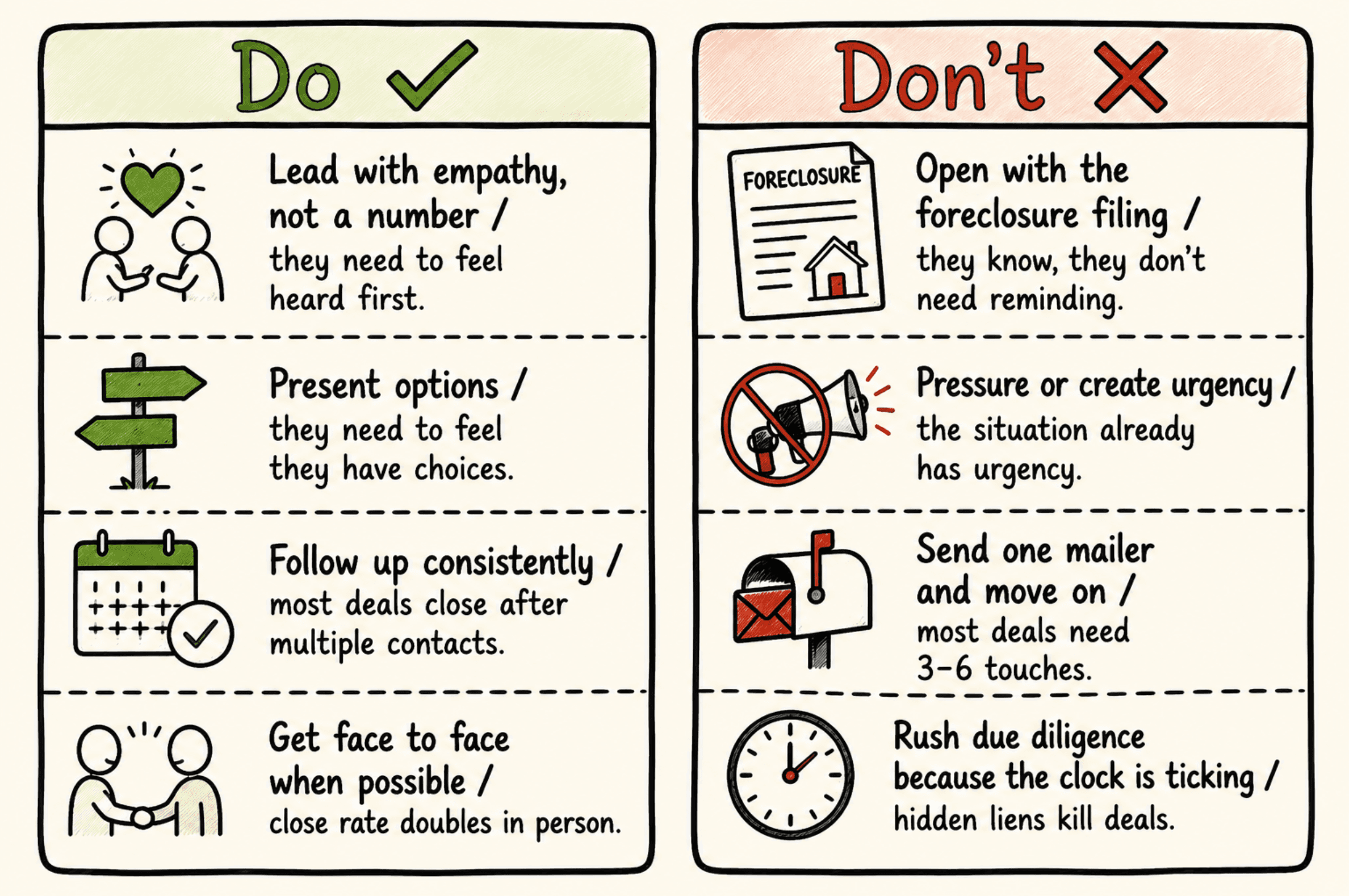
Lead with empathy. Don't jump straight to the foreclosure. Build rapport. This is not a one-contact strategy.
What works:
Direct mail first. A letter or postcard that leads with options, not a number. "I'm a local investor. I help homeowners in difficult situations sell quickly, get cash, and avoid foreclosure. If you'd like to talk through your options, I'm here." That's the door-opener, not "I'll buy your house for $90,000."
Door knocking. More uncomfortable but more effective. Face-to-face contact signals you're real, you're local, and you're not just another mailer. Knock, introduce yourself, ask if they have a few minutes. Many won't engage. The ones who do are worth your time.
The conversation itself. Don't open with the foreclosure. Open with something human. "How long have you lived here?" "What's made things difficult lately?" Let them talk. Once you understand their situation, present options clearly: sell for cash, pay off what's owed, and walk away with whatever's left, or face the auction and likely walk away with nothing.
Present options, not just one offer. A seller who feels they have choices is easier to close than one who feels cornered. Sometimes there are creative structures that work: a leaseback where they can stay a few extra weeks, a subject-to deal, or a fast cash close that covers the arrears. Know your tools before you have the conversation.
The math you need before you make an offer
Pre-foreclosure deals work the same way as any other deal. You need ARV, repair costs, and your MAO before you can make a credible offer.
The difference: equity position matters more here because the seller needs to clear the mortgage balance, any arrears, and closing costs before they see a dollar. A seller who owes $160,000 on a property with a $220,000 ARV and $25,000 in repairs doesn't have as much room as the raw numbers suggest once you factor in what they need to pay off.
Run the numbers before the conversation. ChatARV pulls comps, calculates ARV from actual sold data, and outputs your MAO so you walk into the conversation knowing your number, and knowing whether the deal works at a price the seller can actually live with. Run your numbers here.
The risks specific to pre-foreclosure
The seller reinstates. The homeowner catches up on payments before you close. Your deal is gone. This happens; sometimes, sellers find a family member to help, get a loan modification approved, or refinance. Build your pipeline wide enough that one reinstatement doesn't derail your month.
Hidden liens. Pre-foreclosure sellers sometimes have more debt attached to the property than just the mortgage. Tax liens, second mortgages, HOA arrears, and mechanics' liens from unpaid contractors. Your title company will catch these, but run a preliminary title check before you get too far into a deal. A property with $40,000 in liens you didn't know about changes the math entirely.
Timeline pressure works both ways. You need to move fast enough that the property doesn't go to auction, but not so fast that you skip due diligence. The urgency that makes pre-foreclosure attractive is also what creates bad deals when investors rush.
Emotional complexity. Some sellers agree to a deal, then pull back because they can't emotionally process leaving their home, even when they know it's the right financial decision. Sellers in distress are facing emotional upheaval. Listen more than you speak. Understand their story, fears, and expectations before proposing solutions. Patience here produces more closes than pressure.