
Best Comping Software for Investors: ChatARV 2026 Guide
Discover the best comping software for investors. See how ChatARV finds comps, calculates ARV, and generates offers in 60 seconds. Try it free today.

The best comping software for investors turns a process that used to eat 20 to 30 minutes per deal into something that finishes before a seller even hangs up the phone. For wholesalers, that difference is rarely just about convenience, since whoever hands the seller a confident, defensible number first is usually the one who walks away with the signed contract. However, traditional comping is slow, inconsistent, and depends heavily on who happens to be running the numbers that day. This guide breaks down what separates strong comping software from a basic listing search, and why platforms built specifically for investors have become the standard for anyone who can't afford to lose a deal to slow math.
Quick answer: The best comping software for investors pulls recent, relevant comparable sales and automatically calculates After Repair Value (ARV), as-is value, repair costs, and offer numbers for every exit strategy, typically in under a minute. ChatARV, for example, builds one report that covers wholesale, novation, fix-and-flip, buy-and-hold, and BRRRR deals at once.
What Is the Best Comping Software for Investors?
Best comping software for investors is a category of deal-analysis tools built to replace manual listing research with automated, adjustment-based property valuations. Rather than scrolling through dozens of listings and guessing at adjustments, an investor enters a property address and receives a structured report built around the comps that actually matter for that deal.
These platforms generally combine three pieces: a database of recent sold properties, an adjustment engine that accounts for differences like square footage and condition, and a calculation layer that converts the adjusted ARV into usable offer numbers. ChatARV, for instance, reviews hundreds of nearby properties, surfaces the top six comparable matches, and automatically adjusts for proximity, recency, square footage, bedroom and bathroom count, lot size, and condition before generating a full exit-strategy breakdown. According to Wikipedia's overview of comparative market analysis, this kind of weighted, adjustment-based approach has long been the standard for credible property valuation.
Why Speed in Comping Software Matters for Wholesalers
In wholesaling and investing, speed is money. As a result, the investor who gets a confident number to the seller first is usually the one who gets the contract, even when a slower competitor eventually offers a slightly better price.
Traditional comping doesn't fit that pace. Pulling comps by hand, adjusting for condition, and running the math by feel usually takes 20 to 30 minutes per property, and that assumes the investor already has access to solid data. In non-disclosure states, where sale prices aren't publicly recorded, manual comping becomes even harder.
Comping software collapses that timeline. Because the analysis runs in about 60 seconds, investors using platforms like ChatARV can give sellers a real offer while still on the initial call. As Chris Turney of Fortis Valorem, a daily ChatARV user, explains, he can give sellers an offer on the same call, without the awkward "let me run the numbers and call you back."
Running comps with the best comping software for investors turns a 20-minute task into a 60-second report.
Key Features to Look for in Comping Tools for Real Estate Investors
Not every comping tool is built the same way, and the gaps usually show up at the worst possible moment: mid-negotiation. Therefore, it helps to know what separates a genuinely useful platform from a basic search tool before you commit to one.
- ✓ Weighted comp selection based on proximity, recency, and property condition
- ✓ Automatic adjustments for square footage, bedroom and bathroom count, and lot size
- ✓ Side-by-side ARV and as-is value, not just one blended number
- ✓ Repair cost estimates that recalculate instantly when the scope changes
- ✓ A full exit-strategy breakdown covering wholesale MAO, flip profit, cash flow, and BRRRR
- ✓ Coverage in non-disclosure states, where sale data isn't publicly listed
- ✓ The ability to swap, toggle, or add custom comps
In particular, that last point matters more than it seems. Even the best algorithm occasionally misses local context that an investor on the ground already knows, so staying in control of the final comp set is worth prioritizing over a fully automated score. For context on how valuation accuracy is treated more broadly, the Consumer Financial Protection Bureau's guidance on home appraisals is a useful baseline for understanding why adjustments matter.
How ChatARV Delivers Comps, ARV, and Offers in Under a Minute
To see why speed and accuracy aren't actually a trade-off, it helps to walk through what happens behind the scenes of a single report.
- Step 1: Enter the property address. ChatARV pulls MLS-sourced transaction data across multiple providers, including coverage for all 12 U.S. non-disclosure states where sale prices aren't public record.
- Step 2: The AI reviews hundreds of nearby properties and surfaces the top six comparable sales, weighing proximity, recency, and condition instead of relying on a simple radius search.
- Step 3: Each comp is automatically adjusted for differences in square footage, bedroom and bathroom count, lot size, and condition, producing a consistent, repeatable valuation.
- Step 4: ChatARV calculates both the After Repair Value range and the current as-is value, so investors can see the property's worth before and after renovation.
- Step 5: Repair costs are estimated automatically, and investors can update the scope after a walkthrough so every number recalculates instantly to reflect the real condition.
- Step 6: The platform generates offer numbers for every exit strategy, including wholesale Maximum Allowable Offer, fix-and-flip profit, buy-and-hold cash flow, and BRRRR projections, in a shareable report.
Best Comping Software for Investors vs. Manual Comps
Manual comping isn't inherently wrong; it's simply inconsistent by nature. Two investors looking at the same property can land on different ARVs depending on which comps they happen to find first, how recently they checked the data, and how generously they adjust for condition.
Comping software removes most of that variance by applying the same weighting logic every time. For a closer, numbers-based look at how the two approaches compare on real deals, this breakdown of ChatARV vs. manual comps walks through the time savings and accuracy differences side by side.
Running Comps in Non-Disclosure States
Twelve U.S. states don't publicly record real estate sale prices, which has historically forced investors to estimate values based on incomplete information or expensive third-party data pulls. Consequently, deals in these markets have always carried more guesswork than they should.
Comping software that sources MLS data across multiple providers can still generate accurate comps in these states without requiring an investor's own MLS license. For a state-by-state look at what's covered and how it works, see this guide to non-disclosure states for real estate investors.
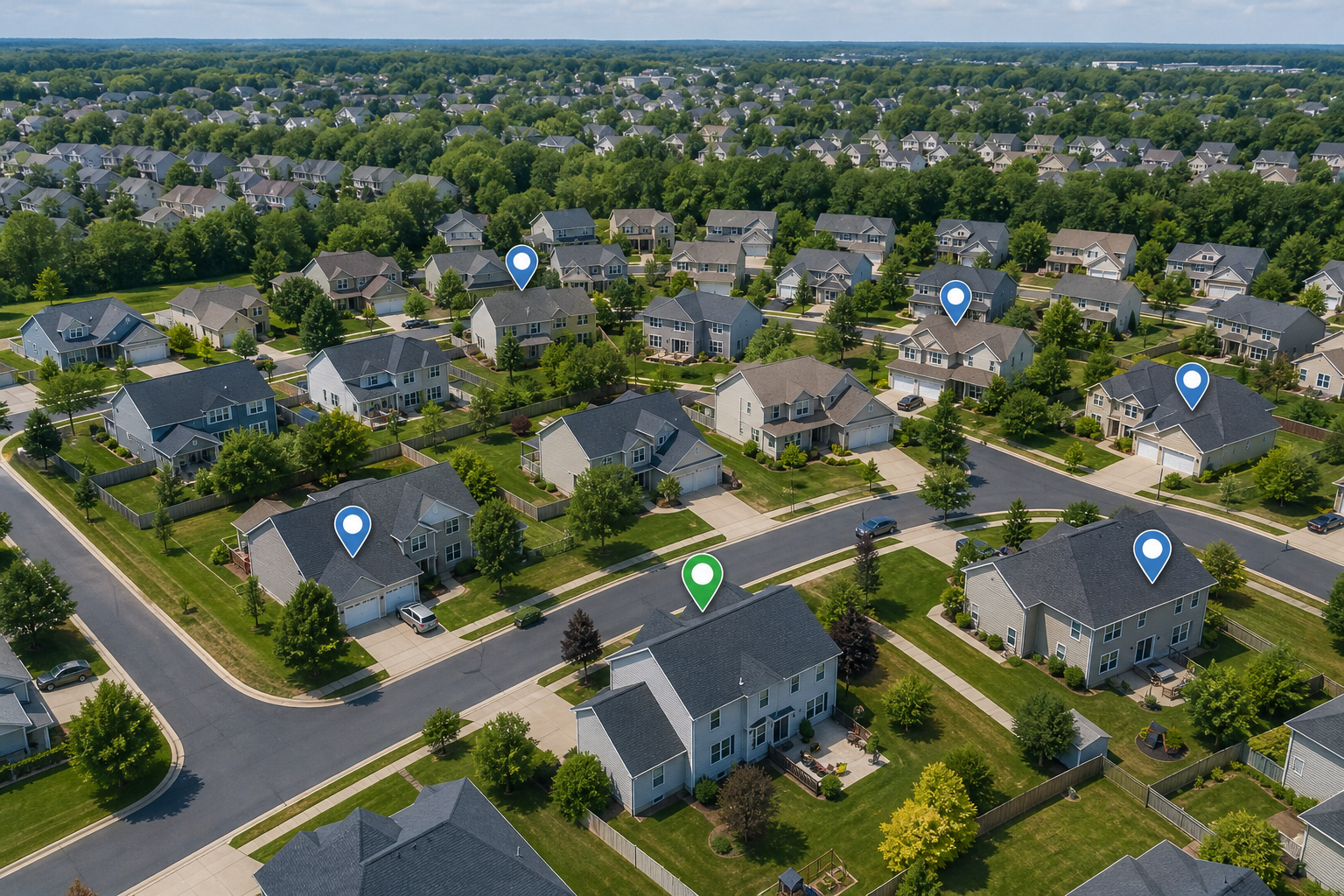
Weighted comp selection accounts for proximity, recency, and condition across nearby sales.
Turning Comp Reports Into Confident Offers
A comp report is only useful if it holds up once a seller or buyer starts asking questions. The strongest reports show the ARV range, the specific comps used, and every adjustment applied, not just a final number pulled from a black box.
This matters most when deals change. When Chris Turney discovered a property needed a full gut rather than a light rehab, updating the repair scope recalculated the full report to $88,000 almost instantly, information he used to renegotiate and land a $35,000 assignment fee on that deal. Investors can see exactly how an as-is comp report breaks down value before and after repairs, which makes that kind of renegotiation defensible instead of guesswork. Beyond valuation, the same reports plug directly into existing underwriting sheets, and the AI can generate property listing descriptions to speed up marketing once a deal is under contract.
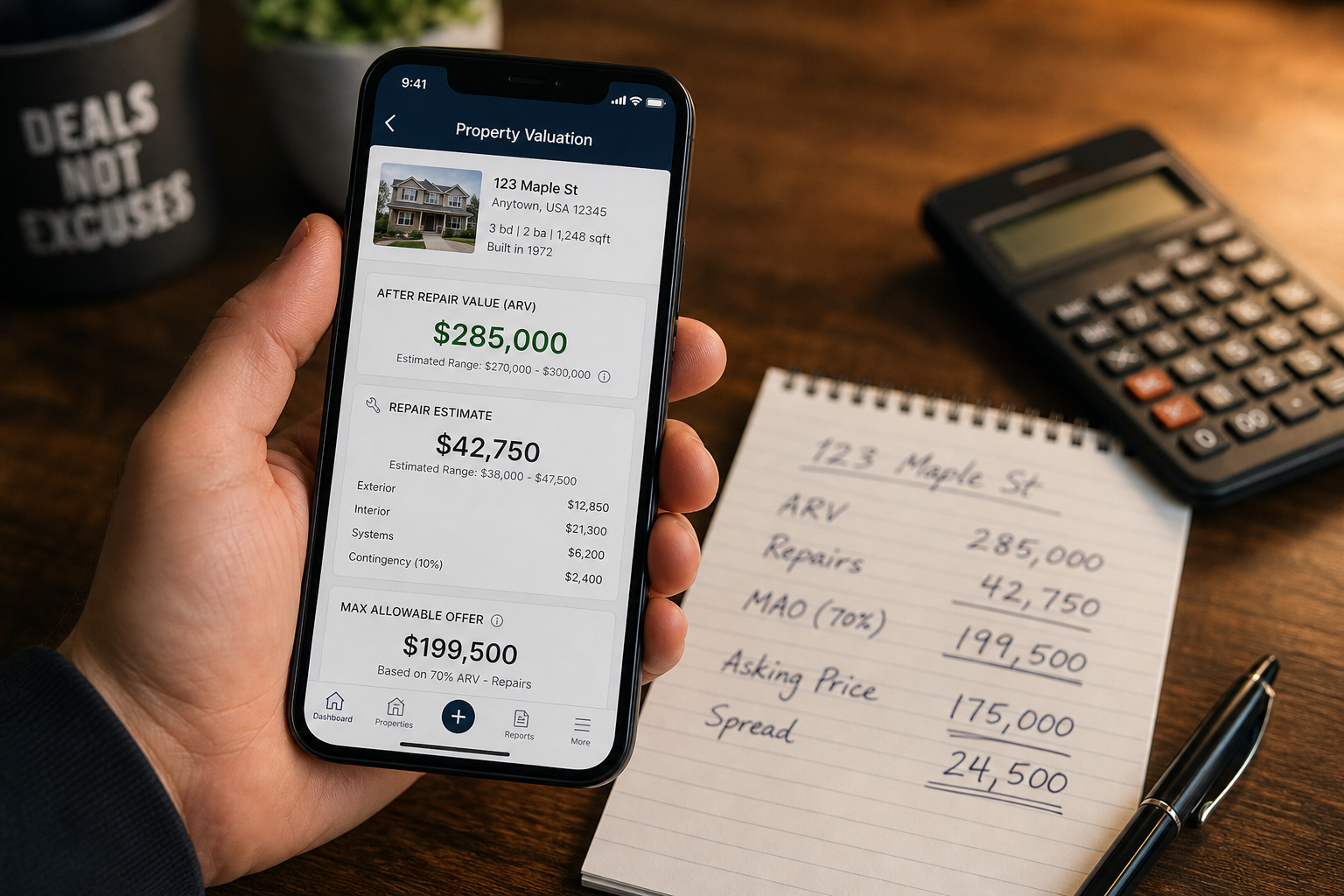
Updating repair scope recalculates ARV and offer numbers instantly inside a comp report.
What Investors Are Saying
More than 20,000 active users across the U.S. rely on ChatARV to run their numbers, and the feedback tends to center on the same two things: time and consistency.
"It's all about time efficiency for me." — Samira Hassan, Hassan Investment Group
Jio Francois of MLJ RE Investments has described ChatARV as central to his day-to-day workflow, echoing a common theme among long-time users: once a tool like this replaces manual comping, few investors want to go back to spreadsheets and guesswork.
Frequently Asked Questions About the Best Comping Software for Investors
What is the best comping software for investors?
The best comping software for investors automatically pulls recent comparable sales and turns them into an accurate ARV, as-is value, and offer price in about a minute. Platforms like ChatARV are purpose-built for this, rather than adapted from agent-focused tools.
How does comping software calculate ARV?
It selects the closest, most recent, and most similar comparable sales, then adjusts each one for differences in square footage, bedrooms, bathrooms, lot size, and condition. The adjusted values are combined into a defensible ARV range.
Why does speed matter when comping a deal?
Sellers often go with the first confident offer they receive, so a slow response can hand the deal to a faster investor. Software that finishes in about 60 seconds lets you make a real offer on the same call.
How much does comping software cost?
Pricing varies by provider and typically scales with how many reports you run each month, from pay-per-report plans to flat monthly subscriptions. Most investors recover the cost quickly once it replaces 20 to 30 minutes of manual research per deal.
Can comping software work in non-disclosure states?
Yes, platforms that source MLS data across multiple providers can generate accurate comps in the 12 U.S. non-disclosure states, where sale prices aren't publicly recorded. This removes guesswork investors previously faced without their own MLS access.
How long does it take to run a full comp report?
A complete report, including ARV, as-is value, repair estimates, and offer numbers, typically takes about 60 seconds with AI-powered comping software. Manual comping through listings and spreadsheets usually takes 20 to 30 minutes or more.
How is comping software different from an agent's CMA?
A Comparative Market Analysis from an agent is generally built for retail buyers and sellers and skips repair costs or investor exit strategies. Comping software built for investors adds ARV, as-is value, repair estimates, and offer calculations for wholesaling, flipping, and holding.
What mistakes do investors make when pulling comps manually?
Common mistakes include using comps that are too far away, too old, or in different condition than the subject property. These errors either inflate the ARV and shrink profit margin, or underestimate it and cost the investor the deal.
Can I customize the comps a tool selects?
Yes, quality comping platforms let investors toggle comps on or off, swap in better matches, or add their own custom comparables. This keeps the investor in control of the final number instead of trusting an automated score blindly.
Does comping software support wholesaling, flipping, and BRRRR?
Yes, the best comping software for investors covers wholesale Maximum Allowable Offer, fix-and-flip profit, buy-and-hold cash flow, and BRRRR projections in a single report. That lets one analysis serve multiple exit strategies without rebuilding the numbers by hand, a process described in more detail on Investopedia's overview of comparables.
Final Thoughts
Choosing the best comping software for investors ultimately comes down to one question: can you trust the number enough to say it out loud to a seller? Tools that combine weighted comp selection, automatic adjustments, repair cost estimates, and exit-strategy offers in a single report remove most of the guesswork that has traditionally slowed wholesalers down. Furthermore, platforms like ChatARV show that speed and accuracy don't have to be a trade-off, since a full analysis can be ready before the seller finishes a sentence. Whether you're running numbers in a disclosure state or one of the 12 non-disclosure markets, the right comping software turns a 20-to-30-minute bottleneck into a same-call offer, and that difference is often what separates a signed contract from a lost deal.
