
Automated Repair Cost Estimation for Real Estate Investors
Automated repair cost estimation gives wholesalers fast, defensible repair budgets in seconds. See how ChatARV calculates accurate numbers today.
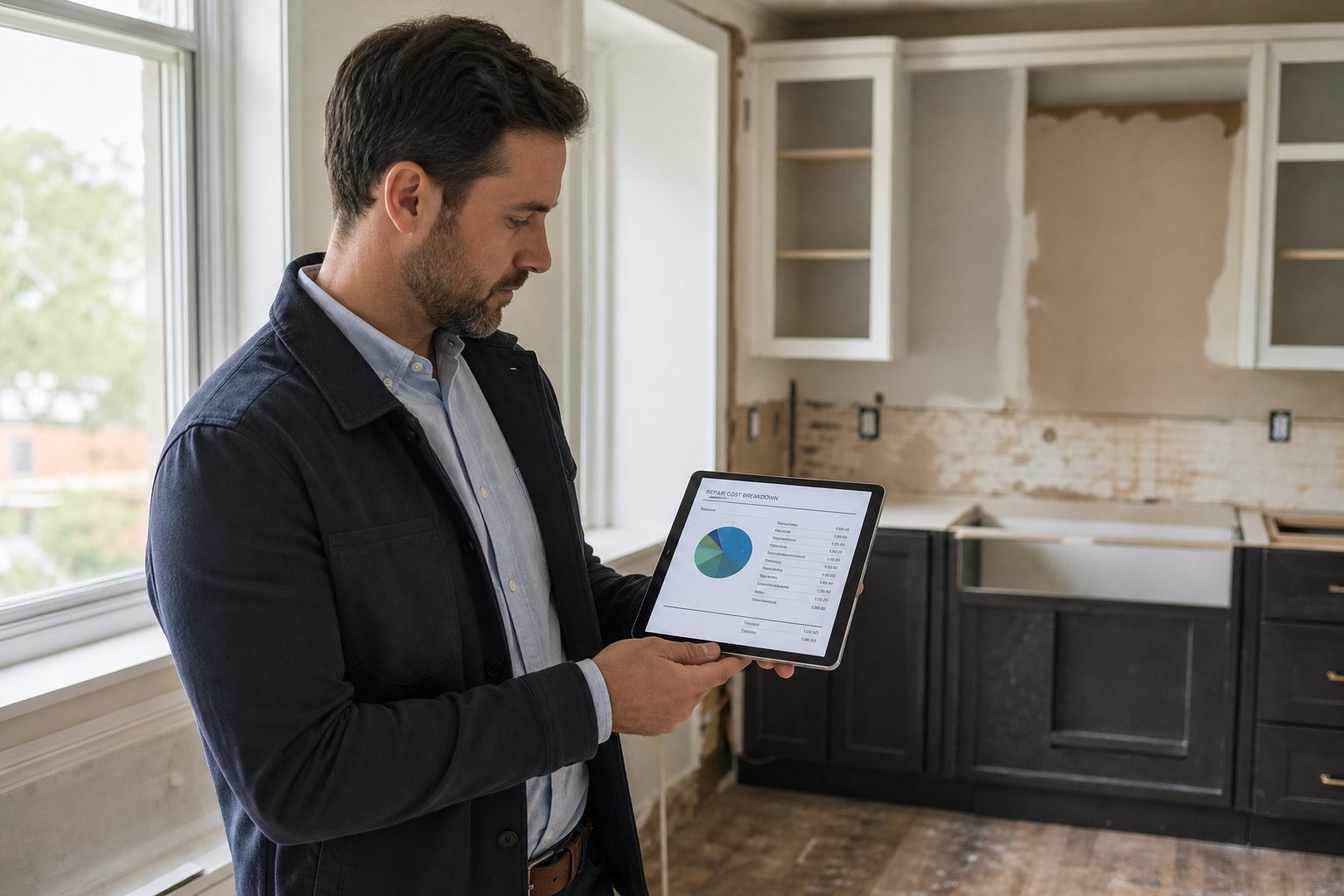
Automated repair cost estimation is changing how real estate wholesalers and investors analyze deals, turning a 20-minute spreadsheet chore into a near-instant number you can trust. Instead of guessing at rehab costs from memory or an old contractor bid, investors now get a defensible repair budget in roughly the time it takes to read this paragraph twice. Above all, this matters because the investor who can quote a confident number first is usually the one who gets the signed contract.
Quick answer: Automated repair cost estimation uses software to calculate likely rehab expenses for a property based on size, condition, and local pricing data, instead of a manual walkthrough and spreadsheet math. Tools like ChatARV deliver this estimate alongside a full ARV and offer calculation in about 60 seconds.
Automated repair cost estimation lets investors review a rehab budget on-site instead of waiting days for a contractor bid.
What Is Automated Repair Cost Estimation?
Automated repair cost estimation is software that calculates likely rehab costs for a property without a manual walkthrough or spreadsheet. In practice, it means typing in an address and letting an algorithm weigh the home's size, age, condition, and local labor and material pricing to produce a repair range. Consequently, investors skip the hours once spent cross-referencing listing photos, contractor texts, and gut instinct.
Traditional repair estimating depends heavily on who is doing the math. One investor might pad numbers out of caution, while another underestimates and gets burned on closing day. In contrast, an automated repair cost estimation tool applies the same logic to every property, so the output stays consistent whether it is your first deal or your five hundredth.
How Does Automated Repair Cost Calculation Work?
Most platforms start with comparable sales, often called comps, which are nearby properties similar in size, age, and condition. ChatARV's AI reviews hundreds of properties around an address and surfaces the six strongest matches, weighing proximity, recency, and condition before it ever touches repair math. As a result, the repair cost calculation is grounded in real local data rather than a generic national average.
From there, the tool adjusts for square footage, bedroom and bathroom count, lot size, and visible condition differences between the subject property and each comp. Specifically, a property needing a full kitchen and roof replacement will generate a far different repair estimate than one needing only paint and flooring. For a deeper breakdown of how a dedicated calculator handles this, see this repair cost estimator for flips, which walks through accurate budgeting for a fix-and-flip exit specifically.
How ChatARV Estimates Repair Costs in Under a Minute
The actual process an investor experiences is short, and understanding it helps explain why speed does not come at the expense of accuracy. Below is the typical sequence from address to offer.
- Enter the property address into the tool so it can pull public records, listing history, and condition signals specific to that home.
- Let the AI surface comparable sales by reviewing nearby properties and weighing proximity, recency, and condition for each match.
- Review the generated repair cost range, as-is value, and after repair value, along with every adjustment applied for size, bed and bath count, and condition.
- Adjust the repair scope if a walkthrough reveals more or less damage than expected, letting the offer recalculate instantly.
- Generate the offer for your exit strategy, whether that is a wholesale MAO, flip profit projection, or BRRRR cash flow breakdown.
Because the entire analysis runs in about 60 seconds, ChatARV users routinely give sellers a real offer while still on the phone. Chris Turney of Fortis Valorem describes it this way: "I'm on it every day… I can give sellers an offer on the same call." Therefore, the gap between first contact and a signed contract shrinks dramatically compared with the old research-and-call-back approach.
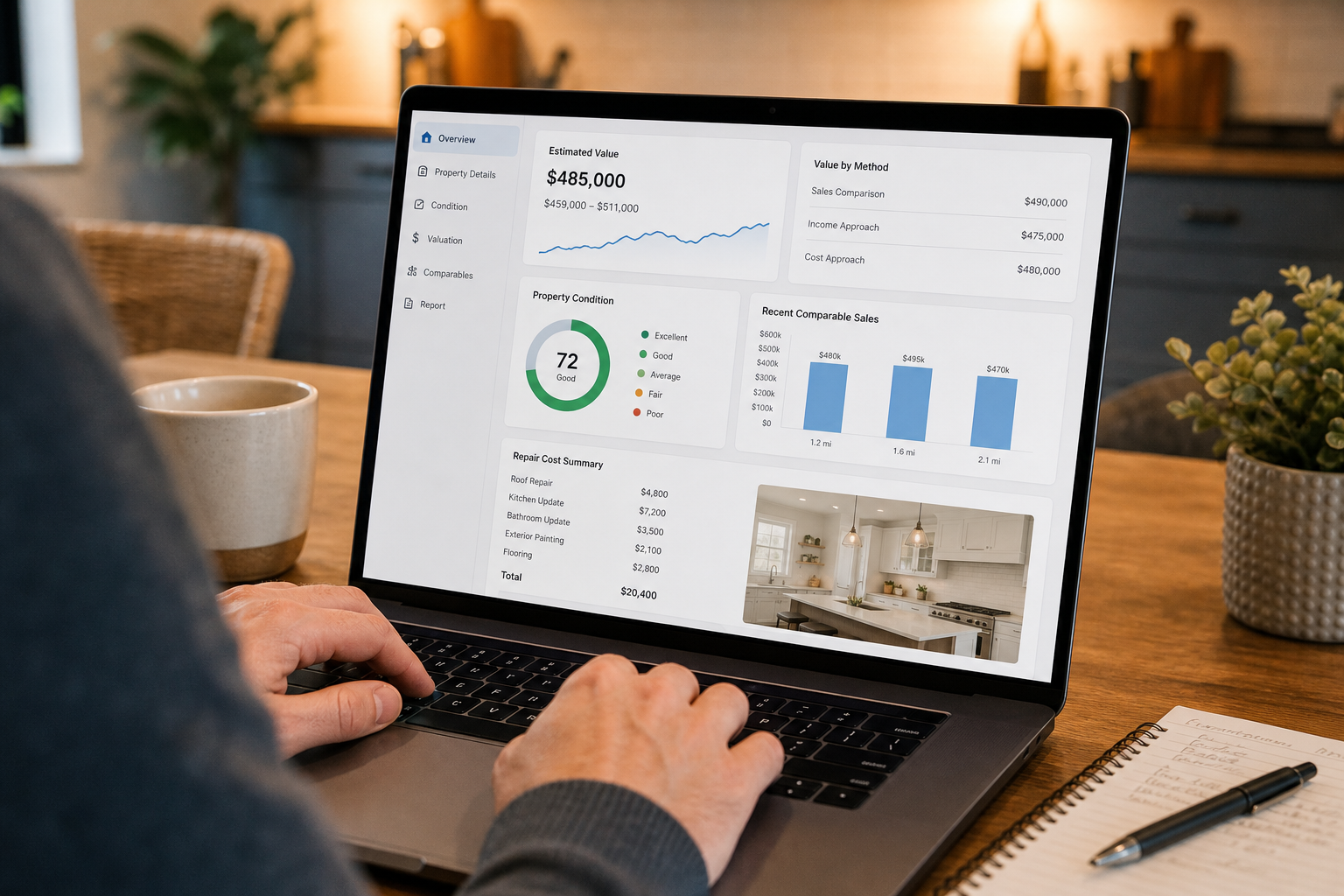
A clear repair cost dashboard helps investors defend their offer number to sellers and buyers alike.
Comparing AI Repair Estimates to Manual Rehab Budgeting
Manual rehab budgeting has always had a speed and consistency problem. A contractor walkthrough can take days to schedule, and even then, two contractors often return wildly different quotes for the same scope of work. In contrast, AI repair estimates apply a repeatable formula instantly, which is especially valuable when a seller wants an answer before you can line up a contractor visit.
The table below summarizes the practical differences investors notice most often.
| Factor | Manual Estimating | Automated Repair Cost Estimation |
|---|---|---|
| Time required | 20 to 30 minutes or more per property | About 60 seconds |
| Consistency | Varies by person and mood | Same logic applied every time |
| Data source | Memory, bids, gut feel | MLS-sourced comps and condition adjustments |
| Scalability | Limited by hours in the day | Works for every incoming lead |
Why Accurate Repair Estimates Matter for Every Exit Strategy
Every exit strategy leans on the repair number differently, but none of them work without it. For wholesale deals, the repair figure sets the maximum allowable offer, which is the ceiling you can pay a seller and still assign the contract profitably. For fix-and-flip, it determines whether the margin between purchase price and after repair value, often called ARV, justifies the project at all.
Buy-and-hold and BRRRR investors face a similar dependency, since rehab costs directly affect cash flow projections and refinance math. In particular, the BRRRR calculator that pulls comps automatically only works as well as the repair estimate feeding it. If the rehab number is wrong, every downstream projection is wrong too, which is why consistency matters as much as speed.
According to Investopedia, after repair value is calculated by estimating a property's worth once renovations are complete, using recent comparable sales in the area as the benchmark. That same logic underpins how ARV is defined and applied across the industry, and it is exactly what automated repair cost estimation tools calculate in the background.
Rehab Cost Tools and Non-Disclosure States
One stubborn problem in real estate appraisal has always been data access. In several states, sale prices are never made public, which historically forced investors to guess at values and repair costs without reliable comps. ChatARV addresses this by pulling MLS-sourced transaction data across a wide set of providers, including support for all 12 non-disclosure states, so investors do not need their own MLS access to run accurate numbers.
This coverage matters because repair cost accuracy is only as good as the comps backing it up. For background on how real estate appraisal methodology generally works, the Wikipedia overview of real estate appraisal explains the comparable-sales approach that most automated tools build on. Similarly, the U.S. Department of Housing and Urban Development outlines renovation financing standards through its 203(k) rehabilitation program guidelines, which offer a useful reference point for how official repair scopes are documented.

Fast, documented repair numbers let investors present an offer confidently before hanging up the phone.
Choosing the Right Automated Repair Cost Estimation Tool
Not every tool labeled as a repair estimator does the same job. Some generic agent platforms bolt on an investor feature without actually showing the comps or adjustments behind a number, which leaves you defending a figure you cannot fully explain. Therefore, look for a platform that is purpose-built around the question that matters most: what should I offer?
A strong automated repair cost estimation tool should show the comps used, display every adjustment applied, and let you toggle or swap comps and edit the repair scope yourself. It should also break out the offer by exit strategy, since a wholesale MAO and a BRRRR projection need different inputs entirely. For a wider look at how an all-in-one platform handles comps, ARV, and offers together, this real estate deal analyzer for comps, ARV, and offers covers the full workflow in more detail. If you are specifically weighing AI options for a flip, the guide on whether there is an AI that estimates repair costs for a fix-and-flip addresses that question directly. You can also explore the platform itself at chatarv.ai to see a live report.
Frequently Asked Questions About Automated Repair Cost Estimation
What is automated repair cost estimation?
Automated repair cost estimation is software that calculates likely rehab expenses for a property using data on size, condition, and local pricing instead of a manual walkthrough and spreadsheet. It typically delivers a repair range in under a minute, compared with 20 to 30 minutes of manual research.
How does automated repair cost estimation work?
A platform like ChatARV pulls property details and condition signals, then applies cost logic across categories such as roofing, kitchens, bathrooms, and systems. The tool outputs a repair estimate alongside comps and an ARV range, so you see the full picture at once.
How accurate are automated repair cost estimates?
Accuracy depends on data quality and how transparent the tool is about its adjustments. ChatARV shows the comps used and every adjustment applied, and lets you edit the repair scope after a walkthrough so the number stays grounded in reality.
How long does automated repair cost estimation take?
With ChatARV, a full repair and ARV analysis takes about 60 seconds from entering an address. That is fast enough to give a seller a real number before the call ends.
Why does automated repair cost estimation matter for wholesalers?
Speed decides contracts in wholesaling. The investor who presents a confident, defensible offer first usually wins the deal, and automated repair cost estimation removes the delay that lets a competitor get there sooner.
What is the difference between automated repair cost estimation and manual estimating?
Manual estimating relies on one person's memory, contractor guesses, or outdated bids, which varies from deal to deal. Automated repair cost estimation applies the same logic every time, producing consistent numbers regardless of who runs the analysis.
Does automated repair cost estimation work in non-disclosure states?
Yes. ChatARV pulls MLS-sourced transaction data across multiple providers, including coverage for all 12 non-disclosure states where sale prices are not publicly recorded. Investors do not need their own MLS access to get usable comps and repair numbers there.
How much does automated repair cost estimation software cost?
Pricing varies by provider and plan, usually based on how many reports or lookups you need monthly. Most tools, including ChatARV, offer tiered plans so solo wholesalers and larger teams both pay for what they actually use.
What common mistakes happen when estimating repair costs manually?
Common mistakes include guessing costs from memory, using outdated contractor bids, and forgetting line items like permits or code-required upgrades. These errors either shrink your margin through overestimating or cost you the deal through a lowball number.
Can I update repair estimates after a property walkthrough?
Yes, good automated repair cost estimation tools let you adjust the repair scope after seeing the property in person. ChatARV recalculates the ARV, as-is value, and offer instantly when you update the scope, so the numbers always reflect what you actually found.
What exit strategies benefit from automated repair cost estimation?
Every major exit strategy benefits, including wholesale, novation, fix-and-flip, buy-and-hold, and BRRRR. Each strategy depends on an accurate repair number to calculate maximum allowable offer, flip profit, or long-term cash flow correctly.
What should I look for in an automated repair cost estimation tool?
Look for transparent comps, editable repair scopes, coverage in non-disclosure states, and exit-strategy breakdowns rather than a single generic number. A tool that shows its work lets you defend the offer to sellers, buyers, and partners with confidence.
Final Thoughts
Automated repair cost estimation has moved from a nice-to-have to a competitive necessity for wholesalers and investors. Speed alone does not win deals, but speed combined with a transparent, consistent number does. As a result, investors who adopt tools built around comps, condition adjustments, and editable repair scopes consistently outpace those still relying on spreadsheets and guesswork.
In particular, the ability to recalculate an offer the moment a walkthrough changes the repair scope, as Chris Turney did when turning an $88,000 rehab discovery into a $35,000 assignment fee, shows how much leverage accurate numbers create. Whether you are running your first deal or your thousandth, automated repair cost estimation gives you a defensible, repeatable foundation for every offer you make.
